
2026 consumer health predictions: GLP-1 popularity and protein rich diets
2026 consumer health predictions: GLP-1 popularity and protein rich diets
Consumers want healthier lifestyles, but cost, confusion, and convenience remain major barriers.
According to the latest YouGov/AHDB Pulse survey, 85% of consumers believe diet is key to health, and 77% say fitness is also important. But with two-thirds of adults in England overweight and 26.5% of these classed obese (DHSC, May 2025), where does it all go wrong on the journey to health and wellness? And what changes might 2026 bring?
Kate Arthur, Head of Nutrition & Health at AHDB said:
“The urgency for healthier lifestyles is undeniable, but with health claims flooding packaging, media, and social platforms, consumers are increasingly unsure which products are genuinely healthy and nutritious. Time pressures, limited cooking skills, and lack of facilities add to the challenge, making quick, simple, nutritious meals harder to achieve. Healthy living isn’t optional anymore; it’s essential. But affordability and clarity must improve if we’re serious about tackling obesity.”
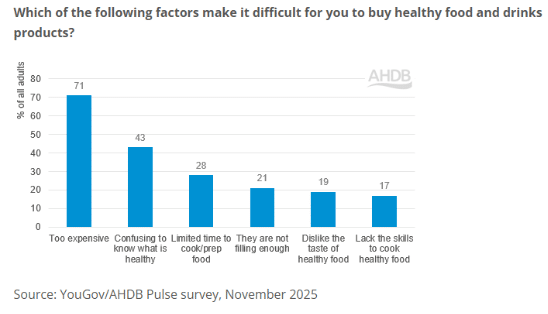
For many households, the cost of healthy eating is the biggest barrier, as 71% of consumers who think diet and/or fitness is important to their health stated that it was too expensive to buy healthy food and drinks (YouGov/AHDB Pulse survey, November 2025). Worldpanel by Numerator data reiterates this, as the cost of an evening meal chosen by shoppers for health reasons is £3.65, which is 13% more expensive than meals chosen for other factors.
In 2026, some consumers are cutting back, with 26% planning to reduce their consumption of ultra-processed foods and 23% planning to reduce sugar, fat and salt from their diet. In terms of additions, 14% of survey respondents are looking to increase their protein intake, 13% want to increase their fibre, and 49% of consumers will increase the amount of exercise they do (YouGov/AHDB Pulse survey, November 2025).
Health goals this year won’t be universal. Younger consumers are much more focussed on short-term wellness benefits and improving body image, while older generations care more about heart health, bone strength and more natural ways to manage their wellbeing.
One of the most talked-about trends in the industry is the rise of GLP-1 weight loss drugs, with 4.1% of GB households reporting current use in 2025 (Worldpanel by Numerator).
Vanessa Adamson, Retail & Consumer Insight Manager at AHDB, said:
“As more consumers are expected to try GLP-1 weight loss drugs in 2026, lean primary red meat, natural yoghurt, milk and eggs are likely to be popular, as these consumers are actively seeking nutrient-dense meals in smaller portions that are packed with protein for muscle maintenance.”
AHDB are continuing to help shoppers make healthier choices by improving their understanding of the benefits of lean red meat and dairy within a balanced diet through their research, reports and marketing campaigns, including ‘Let’s Eat Balanced’, ‘Milk Every Moment’ and ‘This is British pork. But not as you know it.’
To read AHDB’s full consumer health and 2026 predictions article, visit: https://ahdb.org.uk/news/consumer-insight-the-new-consumer-health-revolution